
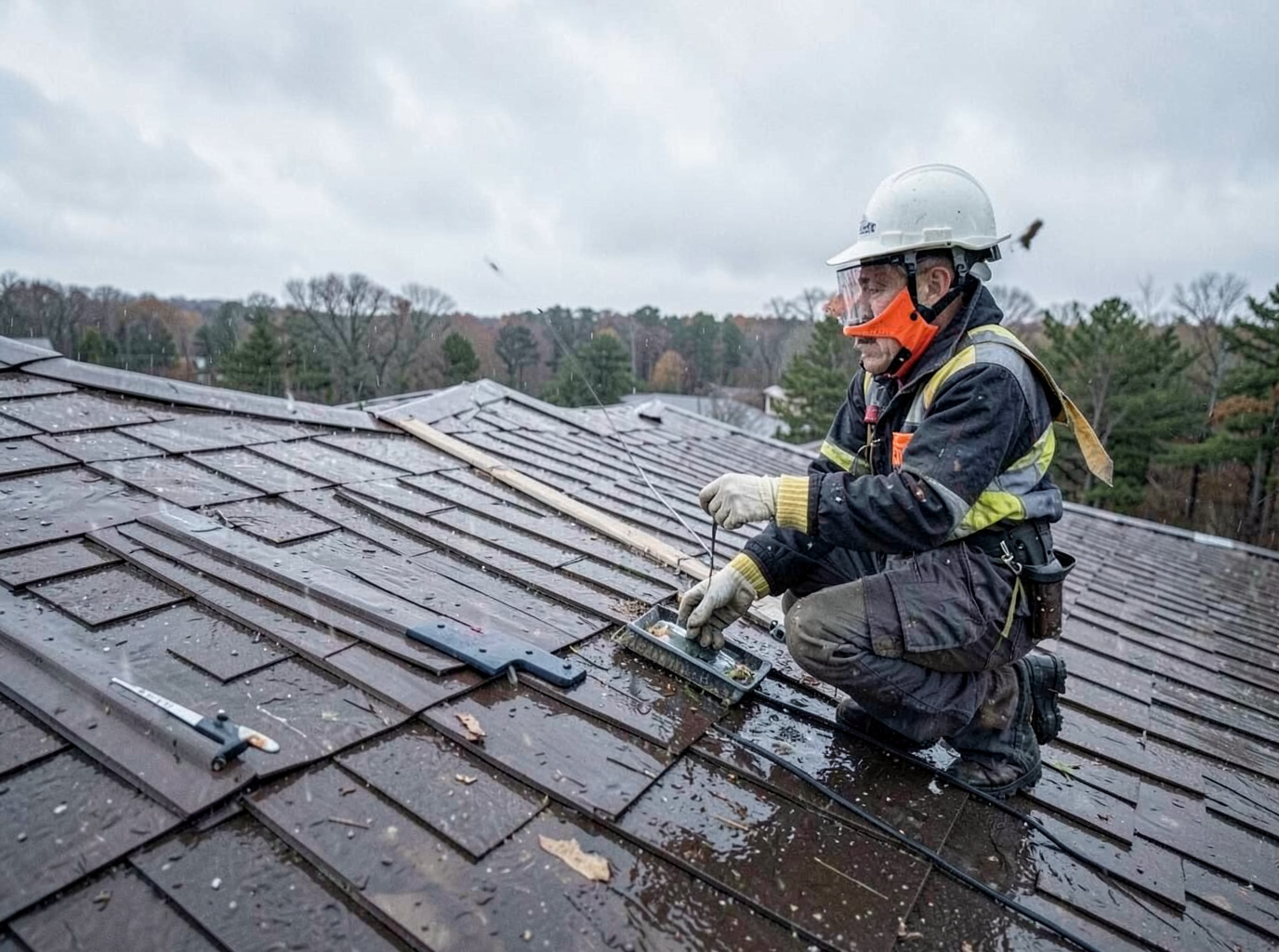
Dubuque's humid continental climate brings sudden summer storms with high winds and hail that hit older asphalt-shingled roofs hard, especially on two-story homes in the North End and South End where access is tight. After these events we look for granule loss, cracked shingles, and lifted edges that let water into the attic before the next freeze sets in. Cold winters compound the problem because any missed damage turns into ice dams along the eaves by January.
Historic Millwork District and Downtown properties often have steeper pitches and mixed materials like slate or metal near the Fenelon Place Elevator area, requiring different inspection points than newer subdivisions. We pay close attention to flashing around chimneys and skylights because river humidity accelerates rust on older fasteners. Missing these details leads to leaks that show up months later when temperatures swing.
Eagle Point Park and properties near the Diamond Jo Casino sit on higher ground with more wind exposure, so we always check ridge vents and underlayment integrity after straight-line winds. Cedar Rapids crews sometimes send overflow work here, but local knowledge of Dubuque County's building practices helps spot code issues on re-roofs that outsiders miss.
We document every finding with photos and notes so homeowners can file claims with realistic repair scopes instead of surprise add-ons later.
Technician insight
In Dubuque the thing that catches most people out with roof inspection after a storm is how quickly a small wind tear on an older North End roof turns into an ice dam once winter hits; the freeze-thaw cycles here hide damage under snow until spring.
Wind Damage on a South End Two-Story
After a July storm a homeowner in the South End noticed attic drips. We found lifted shingles along the south-facing rake and torn step flashing. We documented the extent, recommended targeted repairs before winter, and the owner avoided a full replacement.
Roof Inspection After a Storm Services We Offer
✓Hail Damage Assessment
We map impact patterns on asphalt and metal roofs common in Dubuque after summer storms and note which layers need replacement.
✓Wind Uplift Inspection
Check for lifted shingles and compromised underlayment on exposed homes near the Mississippi River and in the North End.
✓Ice Dam Evaluation
Inspect eaves and attic insulation for hidden moisture left after storms that will freeze again in Dubuque winters.
✓Flashing and Gutter Check
Examine step flashing, valley metal, and downspouts that often fail first on older South End and Historic Millwork District homes.
✓Attic Moisture Detection
Look for water stains and ventilation issues that develop after wind-driven rain in Dubuque's humid summers.
Roof Inspection After a Storm Cost in Dubuque, IA
| Service | Typical Range | What Affects It |
|---|---|---|
| Standard Post-Storm Inspection | $175–$350 | Single-family homes under 2,500 sq ft with standard access |
| Steep or Multi-Story Inspection | $300–$500 | North End or South End homes with limited ladder placement |
| Historic District Add-On | $75–$150 | Extra care for slate, metal, or mixed materials in the Millwork District |
Ranges are typical for Dubuque, IA and confirmed with an exact written quote before any work starts.
How it works
- 1
Site Walk and Safety Setup
We arrive in Dubuque, assess ladder access on the specific roof pitch, and protect landscaping before climbing.
- 2
Surface and Edge Examination
Check shingles, flashing, vents, and gutters for storm damage while noting any pre-existing wear from local weather cycles.
- 3
Attic and Interior Review
Enter the attic to look for moisture, insulation damage, and daylight leaks that surface inspections miss.
- 4
Photo Documentation and Report
Create a detailed report with images homeowners can use for insurance or repair planning.
Pricing
Most post-storm inspections in Dubuque fall in the mid-hundreds; larger or harder-to-access roofs cost more.