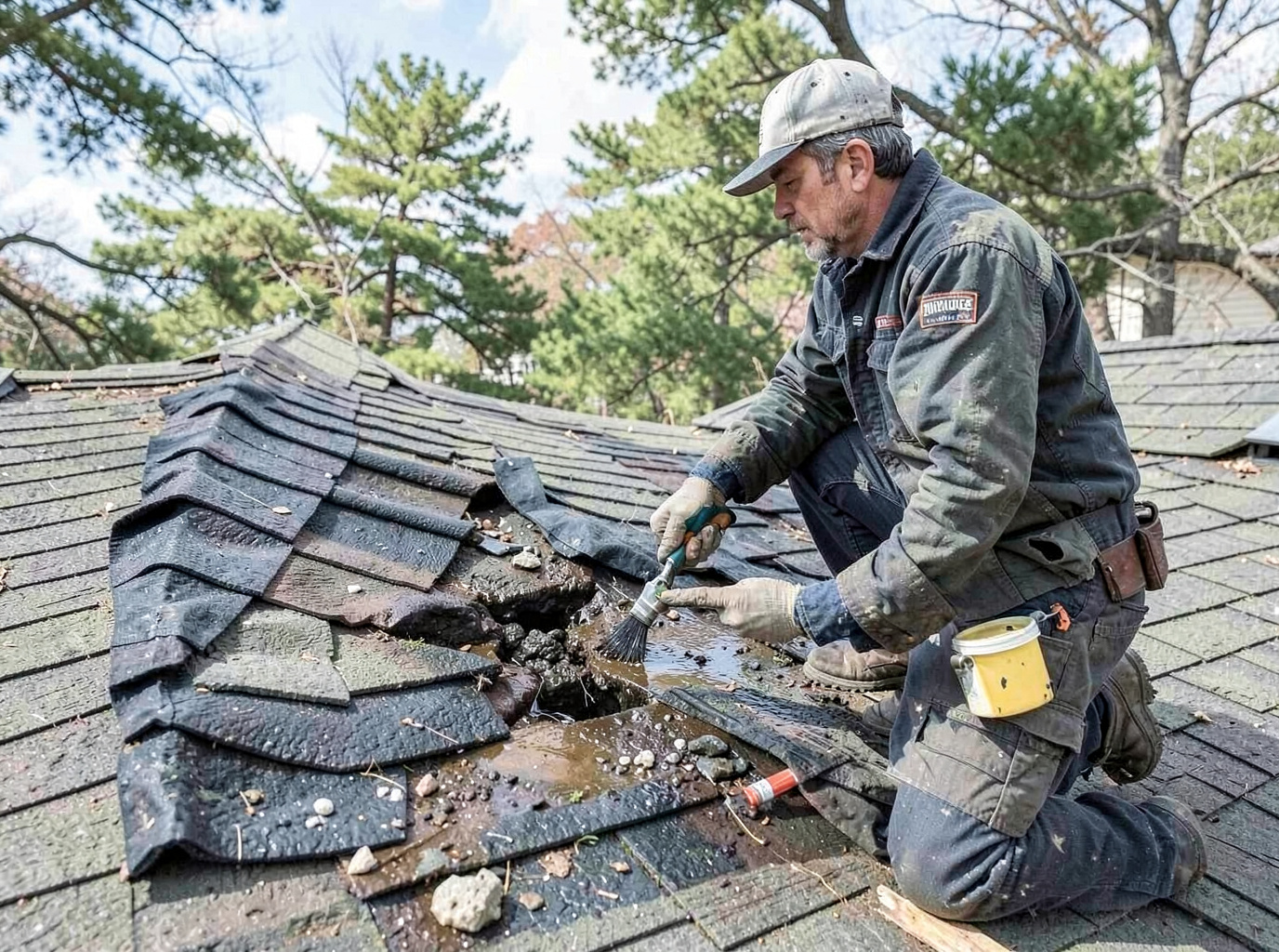
Dubuque's humid continental climate brings heavy snow loads and sudden thaws that push water under shingles and flashing on homes built before 1950 in the North End and South End. Ice dams form along eaves when attic heat melts snow that refreezes at the gutter line, forcing water behind shingles and into sheathing. Older cedar and asphalt roofs common in the Historic Millwork District also develop cracks from decades of freeze-thaw cycles, especially where valleys meet chimneys or skylights. A leak that starts near the Fenelon Place Elevator slope often travels twenty feet before showing on a ceiling, so tracing the actual entry point requires lifting shingles and checking underlayment rather than patching the obvious stain.
Repairs here must account for wind-driven rain off the Mississippi and the steep pitches found on many Downtown Dubuque row houses. We remove damaged sections, replace rotted decking, and install new step flashing that ties into existing brick or siding without disturbing historic details. In the North End, where many homes sit on sloped lots, water can back up from clogged leaders and enter at the rake edge, so we always inspect drainage before closing the roof. Homeowners in Cedar Rapids sometimes drive over for the same service because local crews understand how Dubuque's freeze depth affects fastener placement and sealant choice.
We never rely on tar alone because it fails after one more winter cycle. Instead we match the existing shingle profile, use ice-and-water shield in the lower six feet, and secure new flashing with compatible metals to avoid galvanic corrosion on older copper valleys. Every repair includes a full slope inspection so a small leak in one spot does not mask a larger issue two courses up.
After the work, we walk the homeowner through the repaired area and point out any adjacent sections that show similar wear so future leaks can be prevented before they reach the interior.
Technician insight
In Dubuque, the thing that catches most people out with roof leak repair is assuming the stain on the ceiling marks the entry point. Cold winters create ice dams that push water twenty feet under shingles on North End homes before it shows inside, so we always trace the actual path from the ridge down rather than patching the obvious spot.
North End Ice Dam Leak
Water appeared on a second-floor ceiling after a January thaw. We found the entry at the eave where an ice dam had forced melt under old shingles on a 1920s home. We removed the dam, replaced twelve feet of decking and underlayment, and installed new step flashing. The ceiling stayed dry through the next two snow cycles.
Roof Leak Repair Services We Offer
✓Ice Dam Leak Repair
Remove ice dams and replace damaged underlayment and shingles along eaves to stop meltwater intrusion common after Dubuque's heavy snowfalls.
✓Flashing Replacement
Install new step and counter flashing around chimneys, skylights, and walls to seal joints that open from freeze-thaw movement in older Dubuque homes.
✓Valley Leak Repair
Rebuild open or corroded valleys with fresh metal and underlayment to prevent water from traveling under shingles during warm summer storms.
✓Shingle Tear Repair
Replace torn or missing shingles and reinforce the decking beneath, addressing wind damage that hits exposed South End and North End roofs.
✓Skylight Leak Repair
Reseal or replace skylight flashing and boots that fail from UV exposure and snow load on Historic Millwork District properties.
Roof Leak Repair Cost in Dubuque, IA
| Service | Typical Range | What Affects It |
|---|---|---|
| Single slope leak repair | $350–$850 | Shingle and flashing only; decking adds cost |
| Ice dam and eave repair | $600–$1,400 | Includes underlayment and gutter edge work |
| Valley rebuild | $450–$950 | Metal and underlayment on one valley |
| Skylight flashing reseal | $275–$550 | Boot and step flashing; full replacement higher |
Ranges are typical for Dubuque, IA and confirmed with an exact written quote before any work starts.
How it works
- 1
Site Assessment
Inspect the interior stain, attic, and exterior roof slope to locate the actual water entry point rather than the visible damage.
- 2
Material Removal
Lift surrounding shingles, cut out rotted decking, and clear debris so new materials tie cleanly into the existing roof.
- 3
Underlayment And Flashing
Install ice-and-water shield in vulnerable zones and new flashing that matches the roof pitch and surrounding materials.
- 4
Shingle Replacement And Seal
Lay matching shingles, secure all edges, and apply compatible sealant at penetrations before final cleanup.
Pricing
Most roof leak repairs in Dubuque fall between a few hundred dollars for a single localized fix and low thousands when decking or multiple slopes are involved.